|
DMH Spotlight
....
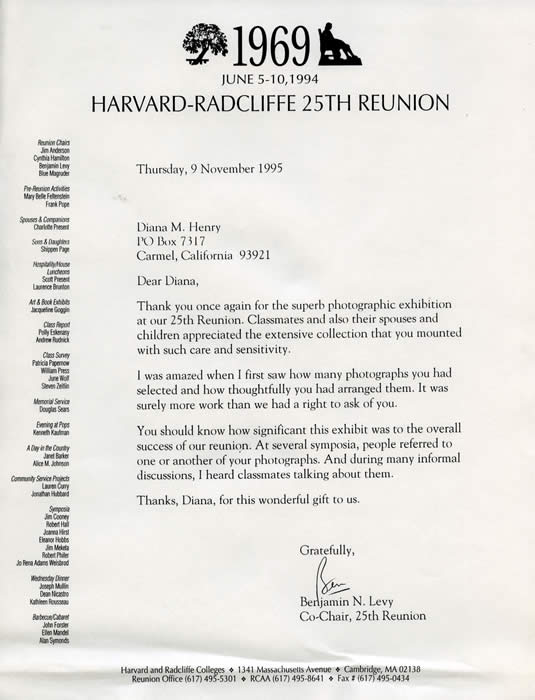
- Harvard-Radcliffe Class of '69 40th Reunion panel: "Photography as a Political Art" with Anne Whiston Spirn and Alex McLean, Moderated by Marilyn Jordan Taylor and 25th Reunion Exhibit. |
Back |
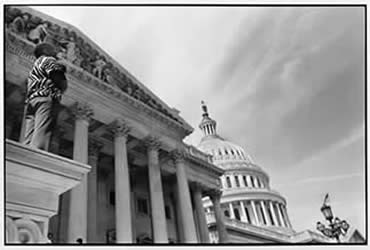
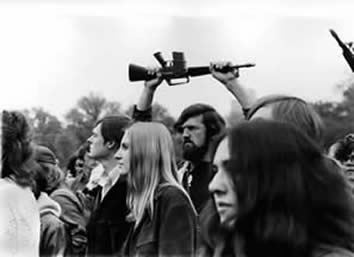
Photographs Copyright © Diana Mara Henry
Thank you, Anne, for inviting me to speak and to Alex for the memories we have been rehashing these past couple of weeks, to Marilyn Jordan Taylor for moderating and to Ben Levy who has done such a heroic job over the years of organizing our reunions, along with Eleanor Hobbs, and to all of you who came today. It is an honor to speak to you.
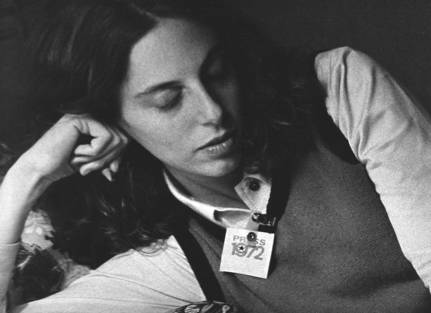
Photograph Copyright © 1972 Stuart Bratesman
The topic Anne proposed, "Photography as a Political Art," was one I was sure applied to my work. I have photographed McGovern, Reagan, Carter, Holtzman, Abzug, Barbara Jordan, Gloria Steinem, marches for the ERA, the Women’s Pentagon Action, etc. But the topic quickly became more challenging when I actually assumed the role of reviewer and presenter. My ex used to say that the artist should never talk about their own work, but step aside and let the critics do that. Since I don’t right now have the luxury of escaping through that door, although my friend Doug Matthews class of ‘66 did offer to present for me, I had to take the challenge and look at my work in historical perspective.
Yes, it has been on book covers, in books, magazines and scholarly journals, but during the years the photographs were taken there were very few places the images were seen, outside of brochures, posters, flyers and tee shirts for mostly doomed political campaigns. I had no MFA connections and only on the job training - the Harvard Crimson was my trade school. That, perhaps, is why someone rich and famous is not speaking to you now. But my lack of academic inculcation and life-long contrarianism have also kept me free.
.........(please email for entire text of this presentation.)
At the very same time that I publicize the campaign to have my photographs of women leaders of the 1970’s used on US postage stamps (Please sign and send in the petition or drop it off for me to do so) I am shocked and saddened by the recent deplorable abuse of Sarah Palin. A man who had likewise been governor from a small state, like Arkansas or Georgia, could reach the Presidency, while the debate about a woman similarly placed rarely rose above excoriating her professional wardrobe expenses, denigrating her intelligence, attributing comedy gags to her, oggling her in a bathing suit, or criticizing her children’s personal lifestyle choices.
As I reach out to women studies departments to show my work, it is obvious from almost all their web sites that the field now promotes violent anti-Israel action as a priority; only Phyllis Chesler, who has actually lived and suffered in Islamic society, has evolved her feminist thinking to encompass the global pandemic of female genital mutilation and honor killings, all others giving them a pass... because of cultural and moral relativism, fear, or fashion? What in feminist thinking could make it okay for children to be taught to blow themselves up and kill others with them? What holds feminists back from advocating that women in all societies be allowed the basic freedoms to divorce, exercise professions, and drive a car? Where are the young photojournalists who are taking on these topics?
On the other hand, some feminists I met along the way have focused on the use and abuse of power as metaphor and crux of any matter of human relations, and have moved on to animal rights activism, a theme in my work too.
It would be my fondest wish that my photographs would convey a kernel of truth about the past, as we approach the world envisioned by George Orwell in 1984...
I comfort myself with the thought that Letty Cottin Pogrebin wrote to me recently, that my photographs “certainly evoke a time in our lives when all things seemed possible.”
I hope you will enjoy the tour that starts at Harvard in 1967 and touches on the exhibit I created in 1986 while in the Visual Arts Administration MA program at NYU, and exhibited in 1988 and 2007: Libel, which challenges our acceptance of photographs and captions as truth. You will also see photographs of the Natzweiler-Struthof concentration camp, the subject of my research for the last 25 years, translating, writing, and presenting. I hope whatever you think of me and my work, that you will continue to evaluate very skeptically the images and scenarios being peddled on the front pages of the NY Times and on the internet as truth, and keep looking in the rearview mirror for what lies ahead. Thank you.
.Photographs Copyright © Diana Mara Henry